
Adventures in PUPlishing
  • Home
  • Bookworms to Butterflies
  • Main Blog Page
  • Adult
  • Picture Book
  • Young Adult
Select Page
Husky laying down
Gray Pitbull sitting
Golden Retriever sitting
Big, fuzzing brown puppy sitting
Cocker Spaniel sittting
German Shepard sitting
Jack Russel sitting
Black and white spaniel sitting
Hound dog sitting
Young Husky sitting

Untitled Post

by Elizabeth Dawson

Free #1st5pages Writing Workshop Opens Saturday, April 6th w/ Lit Agent Karly Caserza and Author L.E. Vollick!

Our April workshop will open for submissions on Saturday, April 6th at noon, EST. In addition to our wonderful permanent mentors, we have Karly Caserza of Fuse Literary as our guest agent mentor and L.E. Vollick as our guest author mentor!

The workshop is designed to help writers struggling to find the right opening for their novel or for those looking to perfect the all important first five pages before submitting for publication. Why the first five pages? Because if these aren’t perfect, no agent, editor, or reader will continue reading to find out how great the rest of your story really is!

Why is the First Five Pages Workshop a GREAT Opportunity?

  • You are mentored by at the guest author as well as least one and usually two traditionally-published published or agented authors from among our permanent mentors for the duration of the workshop. These authors have been through the trenches and know what it takes to get a book deal, solid reviews, and sales.
  • In addition, you receive feedback from the four other workshop participants.
  • Feedback is given not just on your initial submission, but on two subsequent opportunities to revise your manuscript based on the previous feedback so that you know you’ve got it right!
  • The final revision is reviewed by our mentoring literary agent, who will also give you feedback on the pitch for your story–the pitch that may eventually become your query letter or cover copy.
  • The best entry from among the workshop participants will receive a critique of the full first chapter or first ten pages from the mentoring agent, which may, in some cases, lead to requests for additional material. 

How It Works:

Please see the complete rules before entering the workshop, but in a nutshell, we’ll take the first five Middle Grade or Young Adult entries that meet all guidelines and formatting requirements. (Double check the formatting – each month we have to disqualify entries because of formatting.) Click here to get the rules. We will post when the workshop opens and closes on Adventures in YA Publishing and on twitter (@eliza_daws, @etcashman) with the hashtag #1st5pages. In addition to the rotating team of our wonderful permanent author mentors, the final entry for each workshop participant will be critiqued by our agent mentor.

April Guest Literary Agent Mentor: Karly Caserza

Karly Caserza was born in the Philippines and immigrated to Northern California as a child.

She is a Literary Assistant at Fuse Literary. In her spare time, Karly is an Adobe Technical Trainer, freelance graphic designer, Young Adult author, video game geek, and art noob.

Karly has a deep love for characters with a strong voice and seeks out stories she can get lost in. Diversity in genre fiction is a major bonus. She specializes in middle grade and young adult genre fiction (fantasy, science fiction, and contemporary). To query Karly, please send a brief synopsis and the first 10 pages of your work using the form found at this link: Submissions

April Guest Literary Author Mentor: L.E. Vollick 

L.E. Vollick (who also writes under the name L.E. Sterling) is the author of cult hit YA novel The Originals, the Urban Fantasy Pluto’s Gate, and the True Born Trilogy. True Born, first in the series, won the 2017 Athena Award® from the Young Adult chapter of the RWA.

Originally hailing from Parry Sound, Ontario, L.E. spent most of her summers roaming across Canada in a van, inspiring her writing career. She currently lives in Toronto, Canada.

Connect with her online!
Twitter: @LE_Sterling, Instagram: @lesterlingauthor
Facebook: www.facebook.com/LESterling22, www.le-sterling.com

TRUE STORM:
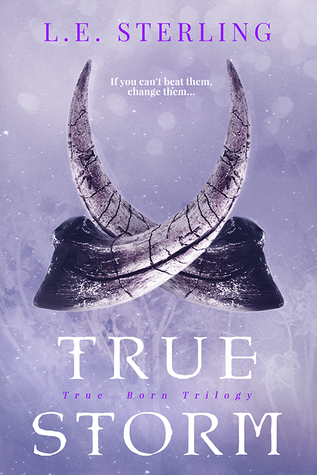
About TRUE STORM: 
Lucy’s twin sister, Margot, may be safely back with her, but all is not well in Plague-ravaged Dominion City. The Watchers have come out of hiding, spreading chaos and death throughout the city, and suddenly Lucy finds herself under pressure to choose her future. Does it lie with her handsome new friend, Alastair; her guardian, the enigmatic True Born leader Nolan Storm; or the man who makes her heart trip, her savage True Born bodyguard Jared Price?

To survive this deadly game of politics, Lucy is forced to agree to a marriage of convenience. But is the DNA of her will stronger than the forces opposing her? Can she turn the tide against the oncoming storm?

TRUE STORM is the third book in the TRUE BORN Trilogy.

Where to Buy: 
Barnes & Noble Amazon Indie Bound
Add it on GOODREADS!

Elizabeth Dawson

Elizabeth Dawson was born and raised in the San Francisco Bay area and lives vicariously through the adventures of her teenage characters as they run around the streets of San Francisco solving crimes. By day, she writes help articles for a software company in Tucson, AZ. Her two cats are gracious enough to let her and her husband live with them and cater to their every wish.

Post © Elizabeth Dawson and/or Adventures in YA Publishing. All rights reserved.
Posted: Apr 3, 2019
Category: Imported from AYAP
Tags:

Welcome to Transmedia Mutts

Yellow origami dog on a teal background

Unleash your creative bark!

  • Follow
  • Follow
  • Follow
  • Follow

Shout out to AYAP!

Logo for Adventures in YA Publishing

Thank you to the women who started Adventures in YA Publishing and ran it for years. AYAP and TMM have merged to form Adventures in PUPlishing, and the legacy AYAP posts are now part of TMM. Click here to learn more about the earlier AYAP team.


Click to Join our Facebook Group

Share advice, practice pitching, celebrate successes, and support each other through writing and publishing adventures.

← Previous: New Releases this week 04/01 - 04/07 Next: Free #1st5Pages Writing Workshop is Now Open! →

The first slide is an animation of a science/magic room in a castle. A cartoon character of a mad-scientist looking man in in the foreground says: “Hello! Dr. Frankenstein here to say, Well Done on kid lit zombie week! I’m an expert at reviving the dead, and let me assure you, with a little spark, you can bring dead projects to life. Especially if you dig up parts from other dead things. I’ll even let you have a sneak peek at my laboratory’s store room to consider potential parts for your dead project. If you see something with a yellow glow, that means you should click it. Have fun!”

He points to the right side of the screen and a new scene slides in of a castle science/magic storage room. There are various cartoon Frankenstein body parts scattered around. Some of them have a yellow glow. If you click on them, the images below appear (I’ve added alt text to them, so I hope it works).

The Heart of your story is the main character. The protagonist is the beating core that truly brings your story to life. If your MC doesn't make kids (and their grown-ups) care within the first few pages, your story will flatline. </p>
<p>Your main character needs to be:<br />
•  Relatable enough for kids to see themselves<br />
•  Unique enough to stand out in the slush pile<br />
•  Active enough to drive the story<br />
•  Memorable enough to survive multiple readings at bedtime</p>
<p>Where do you find this amazing donor heart? It might be the very thing you loved so much about the manuscript you want to revive. It might be the younger sister from your shelved YA novel. Or maybe it’s the hilarious kid you blogged about meeting at a school visit. Find a character beating with potential and place it in the center of your story.<br />
The Brain of your story is the theme or central message. The theme is the big idea that controls everything else. Picture books are more than stories - they're tiny life lessons disguised with humor and heart.</p>
<p>But your theme needs to be:<br />
•  Subtle enough not to trigger the dreaded "didactic" rejection<br />
•  Clear enough for a four-year-old to grasp<br />
•  Universal enough to speak to both kids and adults<br />
•  Fresh enough to prevent agents and editors from responding with "Not another sharing/bedtime/first-day story!"</p>
<p>Check your other dead manuscripts to see if there is a recurring theme, something that really seems to be speaking to you. Find the bit of poetry you scribbled on the back of a receipt to see what theme inspired it. Reread the pep talk you texted your critique partner at 1am. Pick the theme that will drive your story, giving it purpose, direction, and deeper meaning.<br />
The Legs of your story is the plot. Not to be confused with a grave plot.🤪 The plot is what keeps everything upright and moving, as well as providing support for all the other elements. You have very few words to use in a picture book, so you need to do a lot with each plot point.</p>
<p>In general, your plot should:<br />
•  Hook readers fast<br />
•  Build tension that a child can follow<br />
•  Create page turns that feel natural<br />
•  Wrap up in a way that satisfies</p>
<p>You can borrow a plot twist (a leg) from one manuscript and the opening (the other leg) from a different manuscript. Consider if the subplot of the middle grade novel you trunked would work better as a picture book. Or maybe your Facebook post about a disastrous camping trip could become a story for kids. Just keep putting one foot in front of the other until you have your storyline.
The Arms of your story are the side characters.
The Torso of your story is the setting. Setting helps a story breathe and connects all the elements of the story. It isn't just where your story lives, it's what makes your story ALIVE. It's the difference between "this happened in a park" and "this happened in that park, the one with the twisty slide that burns your legs and the creaky swing that sounds like a baby crying.”</p>
<p>Your setting should:<br />
•  Make your character's world feel real<br />
•  Contain your story in a way that makes sense to young readers<br />
•  Connect different scenes and moments organically<br />
•  Give your illustrator enough room to add visual subplots</p>
<p>Half-finished manuscripts are a great place to dig up settings, since you worked out the place details before the plot petered out. Or maybe you had to cut a second fantastic location from your chapter book. You can also revisit the detailed caption from your Instagram carousel documenting your tour of that delish candy shop. Disinter a robust setting that can house all of your story's vital organs.

After you press the Click When Done circle button, the lights flash with the sound of electricity buzzing. Then the screen goes black and lightning zaps across the screen with the sound of thunder.

The screen then lights up to show the storage room, and all the Frankenstein pieces have been assembled into the whole monster. An upbeat song plays in the background. Then a speech bubble pops up with the words, “I’m alive! I’M ALIVE!” Then the screen goes to black. 

Dog holding a sign that says Pupdates!

Sign up for our newsletter for pupdates and publishing advice

Success!

$

Use of this site constitutes an agreement to our Terms & Conditions and Privacy Policy.

AFFILIATE LINK DISCLAIMER: This site contains affiliate links, images, and ads to purchase various products. As an Amazon Associate, and a member of other affiliate programs, this site earns a commission from qualifying purchases if you click on one of these links, images, or ads.

© 2025 Transmedia Mutts, LLC. All Rights Reserved.

  • Follow
  • Follow
  • Follow