Adventures in PUPlishing
  • Home
  • Bookworms to Butterflies
  • Main Blog Page
  • Adult
  • Picture Book
  • Young Adult
Select Page
Golden Retriever sitting
Hound dog sitting
German Shepard sitting
Black and white spaniel sitting
Young Husky sitting
Cocker Spaniel sittting
Jack Russel sitting
Husky laying down
Big, fuzzing brown puppy sitting
Gray Pitbull sitting

Untitled Post

by MichelleRae

We’re so thankful this week to welcome debut author Janet McNally, author of GIRLS IN THE MOON, as she shares the four things she learned while writing her novel.

“You can do so many of the things you think you can’t, the things you’re afraid of doing…You just have to find a way to carry yourself through.”

I don’t remember much about writing Girls in the Moon. I do have notes in a file on my computer, and I skimmed through them once. It was fun to see my word count log grow from 5000 to 25,000 to 50,000, and fun to see the way the story started in such a different place from where it ended. Mostly, though, it felt magical, because like I said, I don’t really remember. Here’s why: when I started writing that novel, I had three daughters and they were very small. The oldest was nearly three and her younger sisters, twins, were nine months old. I was sleeping, sort of, but I was also nursing two infants who really wanted me to hold them as much as humanly possible. It was a weird, blurry, whirlwind time.

But somehow, I wrote a novel. I finished the first draft in seven months or so, then started working through revisions with my agent and after she bought the book, my editor. Now, my twin daughters are three and a half and that novel I wrote is a book-shaped thing in the world (out November 29th!). So what did I learn? I’ll tell you.

1. You have to lose yourself in your book.

Before I started writing Girls in the Moon, I had tried for years to finish a novel and couldn’t seem to manage. A while after my twins were born, something clicked. There are so many think pieces titled something like: “Can you be a mother and still be an artist?” (not nearly as many about fathers). They’re nonsense, but they’re everywhere, and I think I was afraid I wouldn’t be able to write anymore. I decided to work as hard as I could to prove that fear wrong. There was also something about that fuzzy-brained, I-am-trying-to-keep-two-tiny-humans-alive phase that unlocked something inside of me, some cache of creativity or maybe just of stamina. Am I saying that you should go out and have twins to help you write a novel? No. I am emphatically not saying that. But find your own way to motivate yourself, and to immerse yourself in your story.


2. You have to believe you’re a superhero.

Writing is hard. It’s full of doubt and frustration, dotted with beautiful sharp, clear moments when you finally figure out something and the light of heaven shines upon your laptop (or whatever). You have to commit to the long haul when you’re writing a novel. You need to believe you have superpowers that will let you finish.

A month ago I was invited to a local high school to share my poetry. During question time, I called on a student in the front row. “What advice would you have given yourself when you were fifteen?” she asked. I thought about it, then I said this: You can do so many of the things you think you can’t, the things you’re afraid of doing. You’ll think: I can’t do that and then there is a slight possibility I could do that and then I guess I could do that and then I’m doing it. (Note: this particularly applies to edit letters.) You just have to find a way to carry yourself through.

3. You need lots of sidekicks.

I’m continuing with the superhero metaphor here, obviously. Here’s my advice: find your people. For me, this began with my husband, who ran our three-girl circus while I was writing, and my parents who pitched in a lot, too. It’s also my writer friends, who help me see the things in my manuscript that I can’t, and understand exactly what it feels like to try to tell a story you feel is important and then send it out into the world. Find yourself some writer friends, stat, and value the ones you have.

4. You should make sure you’re writing for yourself and for someone else, too.

My students and I have been video chatting with my writer friends during our young adult lit class, and I’ve been struck by the way so many of them have encouraged us to tell the stories we want and need to tell, rather than worrying about what the market might want. I agree. If you put your whole heart into a novel it’s more likely to mean something to you, and to other people too. I wrote Girls in the Moon for my present self, and for my past self too, the girl who used to stay out late at indie rock shows and listen to the same songs over and over. I also wrote it for my daughters and everyone else who is trying to figure out where they fit into their families and the world.

Part of me feels I’m writing down these rules as much for myself as for you, because even though I’ve written one novel, I still have to keep reminding myself of all these things. So we’ll just keep them here in this place where we can come back to them every time we need them. Good luck.
ABOUT THE BOOK

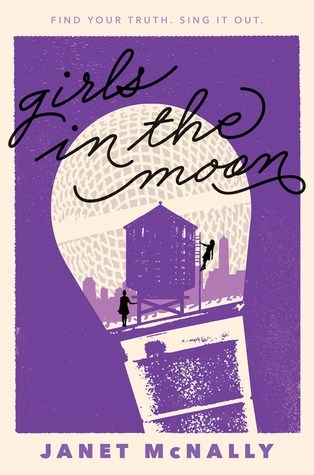
Girls in the Moon
by Janet McNally
Hardcover
HarperTeen
Released 11/29/2016


An exquisitely told, authentic YA debut about family secrets, the shadow of fame, and finding your own way.

Everyone in Phoebe Ferris’s life tells a different version of the truth. Her mother, Meg, ex–rock star and professional question evader, shares only the end of the story—the post-fame calm that Phoebe’s always known. Her sister, Luna, indie-rock darling of Brooklyn, preaches a stormy truth of her own making, selectively ignoring the facts she doesn’t like. And her father, Kieran, the cofounder of Meg’s beloved band, hasn’t said anything at all since he stopped calling three years ago.

But Phoebe, a budding poet in search of an identity to call her own, is tired of half-truths and vague explanations. When she visits Luna in New York, she’s determined to find out how she fits in to this family of storytellers, and to maybe even continue her own tale—the one with the musician boy she’s been secretly writing for months. Told in alternating chapters, Phoebe’s first adventure flows as the story of Meg and Kieran’s romance ebbs, leaving behind only a time-worn, precious pearl of truth about her family’s past—and leaving Phoebe to take a leap into her own unknown future.

View Girls In The Moon on Goodreads
Purchase Girls In The Moon at Amazon
Purchase Girls In The Moon at Indiebound

ABOUT THE AUTHOR

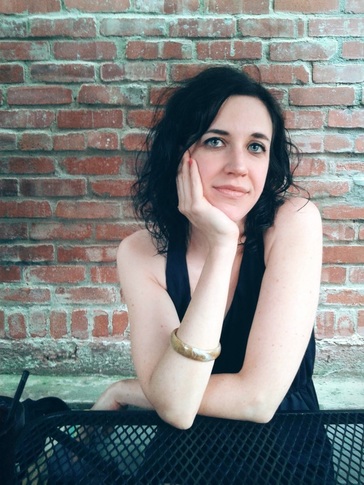
Though her family is not rock and roll royalty, Janet McNally has always liked boys in bands. (She even married one.) 

She has an MFA from the University of Notre Dame, and her stories and poems have been published widely in magazines. She has twice been a fiction fellow with the New York Foundation for the Arts. 
Janet lives in Buffalo with her husband and three little girls, in a house full of records and books, and teaches creative writing at Canisius College. Girls in the Moon is her first novel, but she’s also the author of a prizewinning collection of poems, Some Girls.
Website | Goodreads | Twitter | Facebook

MichelleRae

Post © MichelleRae and/or Adventures in YA Publishing. All rights reserved.
Posted: Nov 23, 2016
Category: Imported from AYAP
Tags: WOW Wednesday | Writing Inspiration

Welcome to Transmedia Mutts

Yellow origami dog on a teal background

Unleash your creative bark!

  • Follow
  • Follow
  • Follow
  • Follow

Shout out to AYAP!

Logo for Adventures in YA Publishing

Thank you to the women who started Adventures in YA Publishing and ran it for years. AYAP and TMM have merged to form Adventures in PUPlishing, and the legacy AYAP posts are now part of TMM. Click here to learn more about the earlier AYAP team.


Click to Join our Facebook Group

Share advice, practice pitching, celebrate successes, and support each other through writing and publishing adventures.

← Previous: Revision Checklist: 30 Questions to Ask Yourself Before Your Tackle the Next Phase of Your Manuscript Next: YALLFest interview with Jonathan Stroud →

The first slide is an animation of a science/magic room in a castle. A cartoon character of a mad-scientist looking man in in the foreground says: “Hello! Dr. Frankenstein here to say, Well Done on kid lit zombie week! I’m an expert at reviving the dead, and let me assure you, with a little spark, you can bring dead projects to life. Especially if you dig up parts from other dead things. I’ll even let you have a sneak peek at my laboratory’s store room to consider potential parts for your dead project. If you see something with a yellow glow, that means you should click it. Have fun!”

He points to the right side of the screen and a new scene slides in of a castle science/magic storage room. There are various cartoon Frankenstein body parts scattered around. Some of them have a yellow glow. If you click on them, the images below appear (I’ve added alt text to them, so I hope it works).

The Heart of your story is the main character. The protagonist is the beating core that truly brings your story to life. If your MC doesn't make kids (and their grown-ups) care within the first few pages, your story will flatline. </p>
<p>Your main character needs to be:<br />
•  Relatable enough for kids to see themselves<br />
•  Unique enough to stand out in the slush pile<br />
•  Active enough to drive the story<br />
•  Memorable enough to survive multiple readings at bedtime</p>
<p>Where do you find this amazing donor heart? It might be the very thing you loved so much about the manuscript you want to revive. It might be the younger sister from your shelved YA novel. Or maybe it’s the hilarious kid you blogged about meeting at a school visit. Find a character beating with potential and place it in the center of your story.<br />
The Brain of your story is the theme or central message. The theme is the big idea that controls everything else. Picture books are more than stories - they're tiny life lessons disguised with humor and heart.</p>
<p>But your theme needs to be:<br />
•  Subtle enough not to trigger the dreaded "didactic" rejection<br />
•  Clear enough for a four-year-old to grasp<br />
•  Universal enough to speak to both kids and adults<br />
•  Fresh enough to prevent agents and editors from responding with "Not another sharing/bedtime/first-day story!"</p>
<p>Check your other dead manuscripts to see if there is a recurring theme, something that really seems to be speaking to you. Find the bit of poetry you scribbled on the back of a receipt to see what theme inspired it. Reread the pep talk you texted your critique partner at 1am. Pick the theme that will drive your story, giving it purpose, direction, and deeper meaning.<br />
The Legs of your story is the plot. Not to be confused with a grave plot.🤪 The plot is what keeps everything upright and moving, as well as providing support for all the other elements. You have very few words to use in a picture book, so you need to do a lot with each plot point.</p>
<p>In general, your plot should:<br />
•  Hook readers fast<br />
•  Build tension that a child can follow<br />
•  Create page turns that feel natural<br />
•  Wrap up in a way that satisfies</p>
<p>You can borrow a plot twist (a leg) from one manuscript and the opening (the other leg) from a different manuscript. Consider if the subplot of the middle grade novel you trunked would work better as a picture book. Or maybe your Facebook post about a disastrous camping trip could become a story for kids. Just keep putting one foot in front of the other until you have your storyline.
The Arms of your story are the side characters.
The Torso of your story is the setting. Setting helps a story breathe and connects all the elements of the story. It isn't just where your story lives, it's what makes your story ALIVE. It's the difference between "this happened in a park" and "this happened in that park, the one with the twisty slide that burns your legs and the creaky swing that sounds like a baby crying.”</p>
<p>Your setting should:<br />
•  Make your character's world feel real<br />
•  Contain your story in a way that makes sense to young readers<br />
•  Connect different scenes and moments organically<br />
•  Give your illustrator enough room to add visual subplots</p>
<p>Half-finished manuscripts are a great place to dig up settings, since you worked out the place details before the plot petered out. Or maybe you had to cut a second fantastic location from your chapter book. You can also revisit the detailed caption from your Instagram carousel documenting your tour of that delish candy shop. Disinter a robust setting that can house all of your story's vital organs.

After you press the Click When Done circle button, the lights flash with the sound of electricity buzzing. Then the screen goes black and lightning zaps across the screen with the sound of thunder.

The screen then lights up to show the storage room, and all the Frankenstein pieces have been assembled into the whole monster. An upbeat song plays in the background. Then a speech bubble pops up with the words, “I’m alive! I’M ALIVE!” Then the screen goes to black. 

Dog holding a sign that says Pupdates!

Sign up for our newsletter for pupdates and publishing advice

Success!

$

Use of this site constitutes an agreement to our Terms & Conditions and Privacy Policy.

AFFILIATE LINK DISCLAIMER: This site contains affiliate links, images, and ads to purchase various products. As an Amazon Associate, and a member of other affiliate programs, this site earns a commission from qualifying purchases if you click on one of these links, images, or ads.

© 2025 Transmedia Mutts, LLC. All Rights Reserved.

  • Follow
  • Follow
  • Follow