Today is my first WOW Wednesday in a long time. I was going to write about fear, something with which I’ve become intimately acquainted. Then the lovely
Erin Cashman tagged me to participate in the My Writing Process Blog Tour, which was perfect timing because my writing process is what actually got me out of the paralyzing fear that had my current WIP at a standstill.
What Am I Working On?
I’m feverishly working on book two of the Heirs of Watson Island series, and my deadline is looming. Writing to deadline, writing for a new editor, writing a sequel is all a little overwhelming. Three weeks ago, I was a weeping mess every time I stared at the paltry few words I was managing to add to book two.
For those who haven’t tried it, writing a sequel is hard. HARD I tell you. You have to remind readers what happened in book one, and also what happened between book one and book two. That’s a lot of backstory to weigh down a beginning! (And lest we forget, backstory and telling are no-no’s.) I tried so hard to avoid the dreaded telling that I ended up having forty pages of aftermath “events” and reaction “scenes” before I ever got to the story question.
Cut.
Forty pages.
Gone.
And there I was, staring at a blank page all over again, still with the same old problem: I needed to set up a very complex new story while simultaneously refreshing the reader about an already very complex backstory.
Oy.
Unique Mythology and Challenges (What makes the series different?)
Compulsion is a Southern Gothic. That means it comes with the requisite supporting cast of quirky characters, including a woman who has never left her house, a maternal drag queen in size fourteen Louboutins, a modern-day Scarlett O’Hara, a gorgeous, dyslexic baseball player, and of course, the innocent heroine who not so innocently charges into trouble. Each of these characters has their own reason (backstory) for being quirky. There is also Watson Island, the setting, which becomes a character in its own right, complete with a town and three individual picturesque plantations near Charleston, SC. Add to that a blend of magical realism, paranormal elements, and a mythology that I’m building toward across all three books, plus several active mysteries, two wishes, a curse, a lost Civil War treasure, assorted nefarious doings, a tale of forbidden and ill-fated love, a three-hundred-year old family feud, a sense of historical continuity and family obligation, and a sizzling romance. Whew. I like to think that all these things set Compulsion apart a bit, but truly, I think it’s the way they work together to drive the story that makes the series unique.
I love that there are so many different layers. But all of that takes page time to set up.
Thinking about how to weave it all into place succinctly for the start of the second book, and how to take the story in unexpected new directions is what made me cringe. I’m also facing the added pressure of a deadline and people counting on me, people who have invested their own time and effort and money into believing in this series.
Bottom line? I froze.
For weeks.
Following the Characters — (Why Do I Write What I Do?)
Part of what got me past the paralysis is that I simply love having the opportunity to do what I do. I love reading books with layers and with characters that live beyond the page. I love settings that make me want to dive in and move in, and books with new twists on mythology or familiar themes. I love reading books like that, so I’m beyond honored and thrilled that someone is paying me to actually write books like this. What frightened me was the sheer enormity of the task.
And I realized something. Any task can be broken down into pieces.
With book two, I’m not starting from scratch. I already have a discovery draft of the book. I have the background from book one that was giving me fits, but that also provides a foundation. And I have the tools that I had accumulated in my writer’s toolbox as I learned my craft.
In short, I have a writing process,
my writing process. I learned something en route to selling this trilogy, so all I had to do to write this sequel was trust myself and fall back on that knowledge.
Easier said than done, of course, but the realization was both liberating and reassuring. It made me realize I’m not going into wholly uncharted territory.
My Writing Process and the Writing Factions
If you’ve been around other writers or the online community for any length of time, you’ll have discovered that we like to identify ourselves as one of two main writing factions, to use the word-of-the-moment.
Plotters: These are the writers who take the time to figure out the beginning, middle, and end of their book before sitting down to write it. Their actual processes are many and varied, including countless daunting things like outlines, beatsheets, worksheets, character bios and journals, and so on. The advantages of doing these things is that at the end there’s a direction, a blueprint, that provides the structure for the novel and gives the writer confidence that there will be a cohesive story at the end of all those words. But it’s not a lot of fun doing worksheets, and the structure can feel like a noose, blocking the joy that comes from the unexpectedness of creation.
Pantsers: These are the writers who wallow in the unexpectedness. They wing it. They sit down every day, and guided by nothing save the voices in their heads, create a story a word at a time that they must then shape into a cohesive story. There’s a certain beauty in that, a wild, joyful freedom. But then to get the book into publishable condition, there’s also a lot of revision, a heartbreaking amount of beautiful words and ideas that cannot help but be thrown away.
Recognize these two factions? Which one are you in?
Are YOU Divergent?
Divergent writers do exist. We’re the ones who, when pressed, will call ourselves Plotsers, or Plantsers, or any number of other creative variations. We do a little planning, a little free writing, a lot of rewriting, and I suspect, a lot of butt-in-chairing.
Don’t get me wrong. I arrived at being divergent by trying every worksheet and outlining system I could find. Heck,
I created plenty of my own. And I still use many of them. I’ve also written one book without any of those structural tools. And then spent years making changes trying to get that book “right.”
What I’ve found when it comes to process is that the various writing factions aren’t so different. No matter how a writer gets there, a successful story requires certain steps. The difference is in how we writers internalize those steps and the order in which we take them.
The Writer’s Toolbox
Prewriting: Whether we formalize the process by brainstorming and jotting notes, creating outlines, completing worksheets, talking it through with a writing partner, or keeping it entirely in our heads, there’s a level of planning that goes into writing a book. The refining of the story question and concept, the development of symbols to underscore themes, the building of the world, the creation of a story bible of names, characteristics, timelines–all of that is necessary unless you have a phenomenal memory.
Many writers formalize the pre-writing planning after the first draft is written. Some do it as they go along. I need to do quite a bit at the beginning to discover a sense of place and of people, and I’ve learned the hard way that I need to begin with characters before I try to formulate a plot or the plot, however cool and intriguing, ends up feeling cardboard and disconnected from the reader.
Before I write, at the very least I have to know:
- who my characters are,
- what each of them wants most in the world,
- what each of them is most afraid to lose,
- what wound or internal fear is going to hold them back,
- and how what each character wants and is afraid to lose is going to conflict with what the others want and are afraid to lose.
Writing: The joyful part of the process, where we have to immerse ourselves in the story world and think about nothing except how the characters react to each other and to events, and how those events inspire additional events. I used to call my first stab at a book an “outline” — but since I’ve yet to write one of those under 30,000 words or one that doesn’t contain dialogue to help me work out what happens next, I’ve decided I write a discovery draft. In other words, I really am winging it, more or less.
Between discovery and the first full draft, the one I’m tackling now, there’s a lot of subconscious thinking that goes on, a lot of percolating, but I don’t necessarily do a lot of formal analyzing.
But to stay on track, to give the writing purpose, whether I do it before, during, or after the first full draft, I need to know some basic information about every scene:
- where and when the scene takes place and the action going on around the dialogue,
- the emotional tone of the scene and how that differs from the previous scene,
- the goal of each character in the scene, especially the MC, and how some element or opposition in the scene keeps her from getting it,
- whether the MC simply failed to achieve her goal, achieved it but was presented with another new and compelling objective, or failed spectacularly and on top of that was set with a new reason (stakes) that made her goal even more important, and finally,
- how the scene changes the main character’s situation and overall goal.
Revision: Knowing that every scene in the story has to change the story, and knowing the tools through which I can identify the changes that I need to make makes it relatively painless to think of making the “big picture” changes that fall into the revision process.
I had a great conversation with my editor last week about book two, and she’s on board with everything I’m doing so far. That’s enormously energizing. But the other thing that she said that lifted a giant weight from my shoulders was that she wants to see my first draft.
On the one hand, that’s a terrifying thought. My first drafts are UGLY. But it’s also freeing, because it means I won’t have spent hours and days crafting and polishing words and sentences that will eventually need to be cut because they don’t serve the story.
I realized that part of what was holding me back from writing was the sense that I needed to turn in something perfect.
If I’ve learned one thing that I wish I’d learned sooner, it’s that there isn’t any point editing before you’ve finished revising!
Editing: For me, this is the slowest, most arduous part of the process. I’ve been putting words together all my life, but I still have a hard time doing it well. My writing sins are many, but I did learn a few things during the editorial process with Compulsion. Before focusing merely on the sound and feel of the words, the critical elements in every sentence include:
- Clarity–Can every reader understand and visualize what the sentence means?
- Specificity–How are the details in the sentence unique to the character and the story?
- Conciseness–Are there words or ideas that don’t add value?
- Lack of Repetition–Are there words or ideas that you’ve used before?
- Flow–Does each sentence flow naturally into the next and create a sense of forward momentum, or does the narrative jump back and forth?
- Appropriate Spelling, Grammar, and Punctuation–Within the context of the voice and characters, is the language correct?
Following the Spark of Creativity
I’m not stuck at the beginning of book two anymore. I’m not paralyzed by fear. I’m more than a quarter through. The characters have taken over, and there is joy in the process again.
Thinking about the structure of the writing process made me realize that I already have all the tools I need to fix anything that goes amiss in this draft. But I’m not going to fix it now. I’m going to just keep writing.
Knowing there’s a structure to the writing process gave me permission to follow the spark of creativity and take joy in discovering the unexpected again. And those are my favorite moments, the ones where I realize why something happened, or how it connects to something else in a way I didn’t anticipate.
Which Faction Are You?
Are you a plotter, a pantser, or a divergent? What’s your favorite part of the writing process? How do you get through the fear?
Previous Stop on the Tour
For more tips and insight into writing process check out Erin Cashman’s post for the My Writing Process Blog Tour last week:
The Exceptionals
by Erin Cashman
Hardcover, 2/1/2012
Holiday House
Born into a famous family of exceptionally talented people, fifteen-year-old Claire Walker has deliberately chosen to live an average life. But everything changes the night of the Spring Fling, when her parents decide it’s high time she transferred to Cambial Academy–the prestigious boarding school that her great-grandfather founded for students with supernatural abilities.
Despite her attempts to blend in, Claire stands out at Cambial simply because she is normal. But unbeknownst to her new friends, she has a powerful gift she considers too lame to admit. Suddenly, the most talented students in school the Exceptionals begin to disappear. In an attempt to find out what happened to them, Claire comes across a prophecy foretelling a mysterious girl who will use her ability to save Cambial students from a dire fate. Could she be that girl? Claire decides there is only one way to find out: she must embrace her ability once and for all.
Purchase on IndieBound | Purchase on Amazon | Add to Goodreads
Next on the Tour
As instructed (shocker, yes, I know–I’m following directions!) I’ve tagged a couple of author friends to be the next stops on The Writing Process Blog Tour:
Tracy Clark, the author of the metaphysical fantasy SCINTILLATE, just out from Entangled Teen and recently sold for foreign rights in multiple languages, will be posting on 3/28 on her blog:
http://www.tracyclark.org/Blog.html.
SCINTILLATE
by Tracy Clark
Paperback, 2/4/14
Entangled Teen
A mighty flame follows a tiny spark.
Cora Sandoval’s mother disappeared when she was five and they were living in Ireland. Since then, her dad has been more than overprotective, and Cora is beginning to chafe under his confines. But even more troubling is the colorful light she suddenly sees around people. Everyone, that is, except herself—instead, she glows a brilliant, sparkling silver.
As she realizes the danger associated with these strange auras, Cora is inexplicably drawn to Finn, a gorgeous Irish exchange student who makes her feel safe. Their attraction is instant, magnetic, and primal—but her father disapproves, and Finn’s mother orders him home to Ireland upon hearing he’s fallen in love. After a fight with her father, Cora flees to Ireland, both to follow Finn and to look for her missing mother.
There she meets another silver-haloed person and discovers the meaning of her newfound powers and their role in a conspiracy spanning centuries—one that could change mankind forever…and end her life.
Scintillate is the first book in this lush and exciting new trilogy, full of romance, adventure and metaphysical mystery.
* * * *
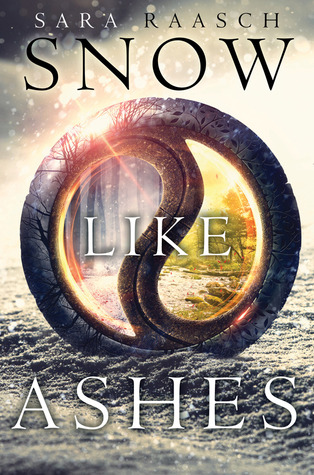
SNOW LIKE ASHES
by Sara Raasch
Hardcover, 10/14/14
Balzer & Bray
A heartbroken girl. A fierce warrior. A hero in the making.
Sixteen years ago the Kingdom of Winter was conquered and its citizens enslaved, leaving them without magic or a monarch. Now, the Winterians’ only hope for freedom is the eight survivors who managed to escape, and who have been waiting for the opportunity to steal back Winter’s magic and rebuild the kingdom ever since.
A heartbroken girl. A fierce warrior. A hero in the making.
Sixteen years ago the Kingdom of Winter was conquered and its citizens enslaved, leaving them without magic or a monarch. Now, the Winterians’ only hope for freedom is the eight survivors who managed to escape, and who have been waiting for the opportunity to steal back Winter’s magic and rebuild the kingdom ever since.
Orphaned as an infant during Winter’s defeat, Meira has lived her whole life as a refugee, raised by the Winterians’ general, Sir. Training to be a warrior—and desperately in love with her best friend, and future king, Mather — she would do anything to help her kingdom rise to power again.
So when scouts discover the location of the ancient locket that can restore Winter’s magic, Meira decides to go after it herself. Finally, she’s scaling towers, fighting enemy soldiers, and serving her kingdom just as she’s always dreamed she would. But the mission doesn’t go as planned, and Meira soon finds herself thrust into a world of evil magic and dangerous politics – and ultimately comes to realize that her destiny is not, never has been, her own.
Sara Raasch’s debut fantasy is a lightning-fast tale of loyalty, love, and finding one’s destiny.